The burden of gratitude

IMG_7483

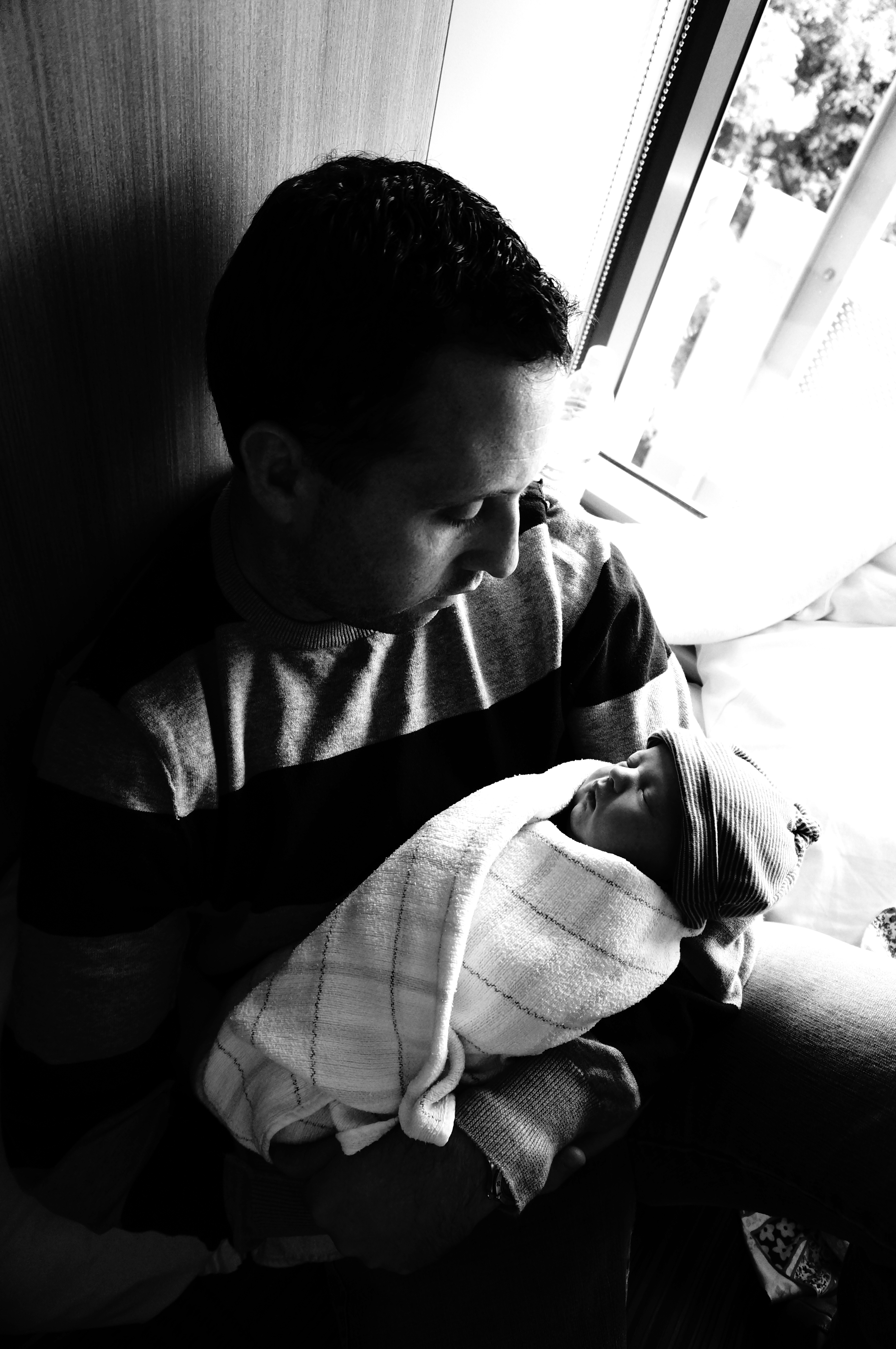
Elijah, like all babies, goes through periods of not sleeping, crying jags and general grumpiness.    On the whole, he truly is a “good” baby, but even good babies have their off days. Good  mothers have them too.

But I won’t tell you about those days. Not because I am trying to hide behind the image of a perfect baby and mother.  But because  it would seem too close to ingratitude.   When you are robbed of your child, you feel robbed of your right to complain about anything other than that loss.   How can I complain about transient things? Everything becomes insignificant in the face of such giant loss.  All other problems dwarfed.  And to complain about a child, the very thing that I lost, that would be an ingratitude too great.

Grief teaches you things.  Teaches you to to appreciate each moment.   You begin to understand the enormous privilege it is to bear and bring up a child.  You start to glimpse the compete preciousness of it all.  You meet those that are desperate to have a baby to hold in their arms, not just in their hearts.  And you realise, even though you have had the most horrible thing to occur, how truly blessed you are to have children.   You cannot help but wonder if you needed to lose in order to learn that lesson.  You hang onto appreciation as a kind of insurance.   If I am grateful for each moment, then Elijah can stay.  If I consciously appreciate every single second of him, I can protect him.  Conversely, if, for even a moment I lose sight of that, maybe he will be taken from me.  I must not complain.

After Xavier died I would see Facebook posts or hear whinges about babies that wouldn’t  sleep or were fussy.  I would wish, wish that were me.  I would wonder how people could be so blind.  I would vow never to be so unthinking.  But does the pendulum swing both ways?  Is all this thoughtful gratitude and gushing presenting an unrealistic image of life?  Am I expecting too much of myself and pressuring others?  Is it just as unthoughtful of me to be posting photos of a picture perfect, content baby all the time?

After all life does goes on and it continues to be challenging.   I wish that Xavier’s death had solved all my problems. All the problems of my friends and family.  But it didn’t.   Perhaps it offered some perspective, but it didn’t eradicate all other pain and it didn’t magically make our lives easy.

After Xavier’s death it took a little while before friends and family would once again discuss their problems with me.  I was glad when they did.  Glad that they thought my perspective would be useful.  Glad that they thought I could cope.  But I know even then they were careful not to complain, not to give any inference that they weren’t completely grateful for their blessings.

Perhaps the answer lies in living with grace, rather than finding limitless gratitude for every moment and a moratorium on complaints.  Living with the grace that I know no matter what life throws at me, I will handle it.  Living with the grace that I know I can see beauty, even in the darkness.  Living with the grace that problems still occur, to me and to others, and that listening and talking about those things doesn’t make me ungrateful.  It just makes me human.


What TO say to the grieving

When we lost Xavier, we were incredibly lucky with the support we received.   Very few people said “the wrong thing”.  And whilst I know most of our friends and family were lost for words,  we felt their support, their prayers and their love.  This is not everyone’s experience after losing a child.

There are plenty of excellent blog posts about what not to say to a grieving parent.   I wanted to talk about why these things are hurtful and some alternatives.    Grief is different for every single person, but at the same time there are commonalities about what gives comfort and what does not.   If you cannot find the right words, that’s okay – just say that rather than relying on trite platitudes.  The sweetest sound will always be my baby’s name.

At least you have your living child/ren.
A bereaved parent is highly aware of their blessings – it may be the only thing they are holding onto.  They don’t need you to point them out.  They did not gain those living children as part of this loss and those children are also grieving their sibling.  In addition, grief is time consuming and tiring work – it can make looking after other children very difficult.   The slack that would be given to a mother of a newborn baby is not afforded to a newly bereaved mother, even though she needs it just as much.
Instead say “I am sure that your living child/ren are a huge comfort right now but I can also see that you need to spend time with your baby and your grief.  Can I help you out by baby sitting?”

You can have more children.
Firstly, you don’t know this nor do you know what the parents have decided regarding have more children.  Secondly, it’s actually irrelevant.  This grief is about their child that has passed away – children are not replaceable or interchangeable.
Instead say “I am so very sorry that (say their baby’s name) couldn’t stay longer.  I will always remember him/her with you.”

It could have been worse – your husband / wife /older child might have died.
You play head games in grief.  You think of people you would  have rather lost than your baby.  Don’t second guess what the result of that horrible game might have been.  Besides, this comment is never going to be comforting to a person who is now suddenly terrified that loved ones can be snatched away  without cause or reason.
Instead say “I can’t understand why this happened to you.  It’s just not fair.”

There are in a better place / this happened for a reason.
This might be your belief.  But I can tell you now, the only person that gives comfort to is the person that hasn’t lost the child.  The best place for any child to be is in their parent’s arms and there is never a good reason for a child to die.  This just isn’t helpful and I think we only say it because someone taught us to say it when someone dies.  Perhaps it has it’s place when an elderly person dies, but not an infant.
Instead say “I don’t know how the world works and why such terrible things happen.  I wish your child was still with you and I will remember them always.”

It was only a miscarriage / thank goodness you lost them now, rather than when they were older.
There is no “only” in child loss.  Every person deals with things very differently and there is no right or wrong.  There are no measures in child-loss grief, there are just different circumstances and the same aching longing to hold our babies.  If you have children, ask yourself – would you prefer to lose them now or later on?  It is an impossible question and trying to answer it gives no comfort.
Instead say “I am so very sorry for your loss.  I am here if you need me.”

I couldn’t get out of bed in the morning / I couldn’t be as strong as you are / The Lord only sends you as much as you can survive – you must be so strong.
The truth is, if this happened to you, you would be getting out of the bed in the morning. You would be trying to make things work.  Your family and friends would still need you.  Your heart and head would have stopped and life would keep moving around you.  Whilst it is probably not what you mean, when this is said to a grieving parent they can hear the intimation that the speaker loves their baby more – that the loss of their baby would render them incapable and therefore their love must be greater.   Strength comes to you because you need it, not because it existed prior to loss.  Extra pain is not allotted to those with extra strength.
Instead say “The days must be really difficult and I want to help you.  When can I bring dinner around for you?”

My sister/friend/mother/aunt lost her baby, and she didn’t carry on this way.  You need to get over it.
Every grief journey is different.  Some are intensely private and you actually wouldn’t have a clue what their heart really looks like.  Others need to express their pain publicly.  Some have never been allowed to express their grief.   The pain of losing a child doesn’t go away, it dims with time but often flares up.  A bereaved parent will need to talk about their child.  Will have bad days, even years after loss.  A grieving parent learns where their grief is accepted and where it is not.  You need to decided which kind of friend you want to be – the one that can live with the discomfort and be there, or the one that would prefer  your grieving friend wear a mask for your benefit.  Think about why you want them to “get over it”.  Do you just miss the person that they used to be or are you genuinely concerned for your friend’s emotional wellbeing?  If you are concerned about their wellbeing, then you need be there for them.  Whatever that might look like.
Instead say “I know that you will miss (say their baby’s name) forever.  Do you want to talk about her/him?”

If you are genuinely concerned that their grief is overwhelming them to a point where it is unhealthy – that is they aren’t taking care of themselves or their family or they seem suicidal, say,

“I know you will miss (say their baby’s name) forever.  I miss them too. I am worried about you.  Is there anything I can do to help?  Do you want to talk? ”    

Educate yourself and contact your nearest SIDS and Kids.  They have counsellors who are experienced in consoling the grieving and they can help you understand what your friend needs and how you can help.

Ever since you lost your child, I have been terrified of losing mine.  Being around you makes me uncomfortable. 
Fortunately, child loss isn’t contagious.  But you do feel terribly, terribly alone.  Having people move away from you because they see their worst fears realised in your life adds to that isolation.  It is natural to fear something that has suddenly become real in your world, but that’s something you need to deal with – not the parent that has lost their child.  Think about the level of your friend’s discomfort and compare it to your own.  It’s not that bad is it?
Instead say “I am so very sorry that (say their baby’s name) isn’t with you.  They should be in your arms.  Please let me know if being around my baby/bump makes you uncomfortable. “

I don’t pretend it’s easy to find the right words.  I don’t pretend it’s easy to go out of your way and really help the grieving.  I don’t pretend that it’s easy to step out of your comfort zone.   But, at the end of the day, if you think any of it’s really hard, it’s nothing compared to losing your child.

The New Me

IMG_3194

The baby loss community is an especially beautiful and supportive one.  When a new member joins this terrible little club, they are extended love and understanding.  When I joined this group that no-one would ever want to be a part of,  that support was invaluable.

In the wake of Xavier’s death, I found comfort online but I needed to see someone who had lost their child and was still living and breathing.  I met with a gorgeous lady who had lost her baby son many years ago.    At the time,  I was in a strange robotic stage of grief.  Not entirely sure what I should be doing or feeling but fearing the future.  I was acting from a script I had to re-write myself from day to day.  In so many ways feeling liking a passive observer – watching myself from a distance and fascinated that this was the way I was handling things.   I felt like I was edging along the huge abyss of time that separated me from Xavier and any mis-step would see me fall right in.  Was this my life from now on?  Was it even possible to sustain?  How would my life look in the months and years to come?  So, I looked to this lovely stranger who shared my devastation and she told me how her son had changed her – how her grief had reshaped her into a very different person. A better person.

I didn’t want to hear it.  I didn’t want Xavier’s loss to make me into a better person. I was entirely fine with the person I was before he left.  I needed no extreme makeover administered by the hand of fate.    And this empty vessel, clinging to life, battered on the shores of grief?  I didn’t want to be her.   I looked in the mirror and I couldn’t recognise myself.  I had become a stranger.    This was not some better version of myself.  This was a shadow, an echo.  A leaf on the wind, without substance or purpose.   I didn’t want to get out of bed and be strong each day.  I didn’t want to be looked at with pitying admiration.   I had no interest in being an inspirational story.   All I ached for was my son.  I would think “this grief thing has been interesting, I have learned a lot but I will have my son back now please”.   Hoping against hope that someone would come to the door, Xavier in their arms, and apologise for a dreadful mix up.

In that early time, I  was convinced that Xavier had been taken from me to teach me a lesson.  To show me that life couldn’t be perfect.  Until that point, my life had remained untouched by tragedy and was rich with blessings.   I thought I had been spared fate’s cruelty.   And then it was as though fate noticed me, said “Ah yes, she’s had it easy for far too long, now, what’s the worst thing I could do to her?”  And this conspiracy by fate to teach me a lesson – I wanted no part in it.  I would not be taught – I would not allow a reason for Xavier’s death.   If grief had gifts to give, I didn’t want them.  Accepting them felt too close to accepting Xavier’s death.

Could I not simply go back to who I was after a period of grieving?  Did I have to lose who I was as well as my son?  Where did the losses end?

But grief becomes a gentler companion with time and it was inevitable I would change.   Perspectives alter when your world shifts.  What is important becomes crystal clear and you begin to see that it is possible to gain in the midst of loss.  I began to realise that the person I was becoming was a way of honouring Xavier’s life rather than giving some sort of credence to his death.   Began to appreciate that treasuring every moment was a gift he had given me.    In the early months after Xavier died I struggled with the idea that the happiest moments of my life were behind me.  That no beautiful moment could ever be perfect.  Whereas I may have had plenty of those perfect moments prior to Xavier’s death – did I realise them? Did I treasure them?  Did I truly realise the full precious weight of those moments?  And so now, even though the moments are dulled by sadness, I appreciate them in way I never could before.  There is more beauty in my life because I pause to notice it.  I invest more in friendships because I know how valuable they are.  I love more because I have seen just how much I am loved.  I take each moment as a gift.   Each of those moments, strung together and stitched into time.  Those moments that rather than separate me further from Xavier,  will eventually bring me back to my son.  And that is something to treasure.

Are You OK?

Today is Are You OK? day.  A day that reminds us of the importance of reaching out to those around us.  A day where we should go beyond a casual, throw-away  “How are you?”    

That question has become an empty courtesy – like “Hello” and “Good-bye” but how often do we expect or want a real answer?  We are taught to reply “well” or “fine” when we may be anything but.   When we first lost Xavier I learned to distinguish between the sincere “How are you?” and the concessions to politeness.   Indeed, there were many who avoided asking all together, I can only imagine for fear of the answer.  It’s a brave thing – to ask “Are you okay?” or “How are you?” and be willing to truly accept the responsibility of a honest answer.  In our time poor, meme rich lives, how often do we engage in real conversation that reveals the heart?  We have become used to a few words on a Facebook status to describe “How are you feeling?”  But our hearts and souls need more than that.  We need time and conversation and nourishment.  How often are we willing to invest that time in one another?  

In the first few weeks after Xavier died, when strangers asked “How are you?”, there were times I responded with a completely honest answer.  The poor clerks at the check out saddled with an answer that they did not expect.  But I needed to tell someone.   I needed to say “Not so well – I am hurting today”.  And sometimes, the only person that asked was a stranger who was paid to be polite.  Most times, however, my beautiful family and friends asked that question in a genuine way.  I have two very close girlfriends who are lights in my life.   When I would reply “okay” they would respond “no, really – I want to know how you are going today.”  And it gave me permission to go beyond our societally regulated responses to the question “How are you?”  We need to give people around us that permission – we need to let them know that we genuinely care.  When my lovely boss asked me how I was a few weeks after Xavier died, I replied with my standard “okay”.  She shook her head and said “You aren’t – you’re not okay, but you will be and right now it’s okay that you’re not okay”.   Sometimes we just need to hear that too – sometimes it’s okay not to be okay.   I value every time someone genuinely gave me the opportunity to talk about my feelings, particularly in the days, weeks and months following Xavier’s death.   

I think that’s what “Are you OK?” day is about – it’s about creating the time and space and love around someone to allow them to talk about what they need to talk about.  It’s being completely unselfish and completely genuine when asking the question “Are you OK?” or “How are you?”

So today, ask someone “Are you okay?” and be truly engaged in the answer. You never know the impact it will have on someone’s life.


Holes in our hearts … but we carry on

I don’t often cry over Xavier.  Even in  the early months, I didn’t sob as often as I would have expected.  During support groups, I would be amongst the few whose cheeks remained dry.  For a little while this worried me – was there something wrong with me? Was this unhealthy grieving? Would the dam burst one day and floods of un-shed tears finally overtake me? Was I in denial? I began to realise that my way of grieving was simply more cerebral.  I analyse rather than cry, think rather than sob, write rather than weep.    And that’s okay.  It doesn’t mean I miss or love my son any less.

However, there is one thing that unleashes the tears.  Music unlocks something in my heart and the tears flow in sweet release.   When I was teenager, music played an important part in my life.  I would see my own feelings reflected in song lyrics all the time.   It has been a long time since I have sought solace in the same way.  Nowadays my life means that I tend to listen to music in the car, when a random song on the radio can unexpectedly send me reeling.

There are certain songs I simply cannot hear – Beautiful Boy by John Lennon,  Small Bump by Ed Sheeran, Last Kiss by Pearl Jam.    Then there are snatches of lyrics that never meant anything to me before that suddenly carry a profound weight.  Songs about loves lost and the inability to live without them. The song “Holes” by passenger hits home at the moment.

Well sometimes you can’t change and you can’t choose And sometimes it seems you gain less than you lose Now we’ve got holes in our hearts, yeah we’ve got holes in our lives Where we’ve got holes, we’ve got holes but we carry on

I have gained so much since Xavier died.  Learned more than I could have conceived.  But I would give it all up in less than a heartbeat if I could hold him again.   You gain less than you lose .   The gifts of grief can be hard accept – you never want to regard their origin with anything approximating gratitude.  Yet they are there – they exist.  And yes, they never amount to the same weight as the life of a child, but they are what you are left with.  We  carry on – life carries us on her relentless tide.  

We’ve got holes but we carry on.

Grieving Fathers – a Poem

DSC00195


As Father’s Day approaches I wanted to share a poem I wrote about men in grief.  The strong and silent grief that bears the weight of supporting a fractured family.  The grief that rarely speaks, but is just as important, just as real and just as painful as the grief of a mother.


A Baby and His Daddy

It’s very early morning,
The clock is nearing one,
And the tears are finally falling,
For himself and for his son.

The girl beside him sleeps,
He doesn’t want to wake her,
For when the morning breaks,
The grief may overtake her.

In these still and silent hours,
He can let himself feel,
He can let himself be broken,
He can start to heal.

For those still and silent hours,
Before the sun lights up the sky,
Belong to a baby and his daddy,
The time that he can finally cry.

Ladders in Loss

There is an unwritten ladder of grief that bereaved parents seem expected to adhere to.  An expectation by society that a miscarriage hurts less than a still birth, a still birth less than a neonatal loss,  a younger child less than an older one.   And the length of time allowed for grieving contracts the younger your child was at the time of loss.

The truth is, that ladder is a lie.  There is no “more than” or “less than” in grief – each story holds its own tragic weight.  A weight that defies categorisation or comparison.  For as much as there is no “less than” there is also no “the same as”.  My grief over Xavier is different from the mother who lost her baby at birth, different from the father who lost his son to an accident at three years old,  different from the parents who learned at their thirteen week scan that their baby had no heartbeat, indeed, different from another  family who lost their son at two weeks old to SIDS.    But it is not “more than” and it is not “less than”.  We are different but bound by the common devastation of holding a child in our heart, rather than in our arms.

There is no finite amount of grief that needs to be shared amongst the bereaved.    Each journey is different and each journey is valid.   How someone else grieves their child is their business – the intensity of their sadness does not somehow invalidate my grief over Xavier.  There is no competition. There are definitely no prizes.

When we first lost Xavier at just two weeks old to SIDS, I wondered whether it would have been easier if  he had born still.  Would that have hurt less?  It is an impossible question.  I am so grateful for the two weeks we spent with our middle son.  I would never wish it away.  I would rather have loved and lost him, than to have never had him at all.   Every parent treasures the time they get to spend with their child.  And yet those that didn’t get to spend any time with their living baby outside the womb are expected to hurt less.  It defies logic. A baby is a baby to their parents the happy moment they find out they are pregnant.  Hopes and dreams for that child often formed before that.  Every baby is a miracle.  Whether you grieve the memories you made or the memories you never got to make, that grief is real and cannot be contained within imaginary boundaries.   Parents need to grieve, without judgement and without ladders.